
"geographical distribution"
1000 article(s) found

Bright taste Panamanian Coffee Flavor the characteristics of the manor producing area introduction to Iletta Manor
The distinction between Panamanian growing areas mainly depends on the sales situation of coffee, but mostly on geographical distribution. In the past, coffee was widely spread, and the following areas are actually one area, but these areas are closely linked. Boquete, this is the Panamanian region that we are most familiar with. The special mountainous terrain of this area forms a microclimate which is very suitable for growing coffee. A cool day

Latitha Manor single Pin Bean Manor Distribution Coffee Bean treatment method description of planting History and Flavor
Communication of professional baristas Please pay attention to the Coffee Workshop (Wechat official account cafe_style) volcanic soil, high altitude, humid and rainy climate, active volcanic activity has created the unique geographical conditions of the Farahan Plateau. The Pacaya volcano in the region is the most active of the three volcanoes still erupting in Guatemala, leaving the Farahan Plateau often shrouded in a thin layer of dust and

High-balanced Columbia exquisite boutique coffee bean cultivation geographical location, climate, altitude is simple.
The annual temperature there is about 18 degrees Celsius, the annual rainfall is 2000 to 3000 mm, latitude 1-11 15 north, longitude 72-78 west, the specific range can exceed 2.000 meters above sea level. By a special combination of factors, the latitude, altitude, soil, plant origin of species and varieties of coffee in the coffee growing areas of Colombia, the climate and tropics of the coffee growing areas

A brief introduction to the planting situation of Rose Summer Fine Coffee beans, Geographic location, Climate and altitude
Haines, a Swede, in 1924. Elliott founded Esmeralda Farm, which was not a coffee grower but a ranch. Forty years later, Daniel Lou in 1964. Mr. Bidarson's grandfather, Luther Ruffer. Mr. Bidarson bought Esmeralda Farm in order to have an old home after retirement, grandfather Luthor. Born in Sweden, Mr. Bidarsson was president of Bank of America and United.

Full-bodied Yunnan small-grain coffee Huaguoshan boutique coffee bean cultivation geographical location climate sea
The planting areas are mainly distributed in Lincang, Baoshan, Simao, Xishuangbanna, Dehong, Nujiang and other states. The average temperature of Lujiangba in Baoshan is 21.5℃, and the highest is 40.4 ℃, which is basically frost-free all the year round. It is recognized as the best producing area of small-grain coffee. The small-grain coffee cultivated here is famous at home and abroad for its strong but not bitter, fragrant but not strong, well-proportioned small noodles, mellow and fruity. In recent years

What are the characteristics of Yunnan coffee Yunnan coffee bean flavor introduction to Yunnan coffee distribution
For the exchange of professional baristas, please pay attention to the coffee workshop (Wechat official account cafe_style) the western and southern parts of Yunnan Province are located between 15 N and the Tropic of Cancer, most areas are 1000-2000 meters above sea level, and the topography is mainly mountainous and sloping, with large undulation, fertile soil, sufficient sunshine, rich rainfall and great temperature difference between day and night, these unique natural conditions form clouds.
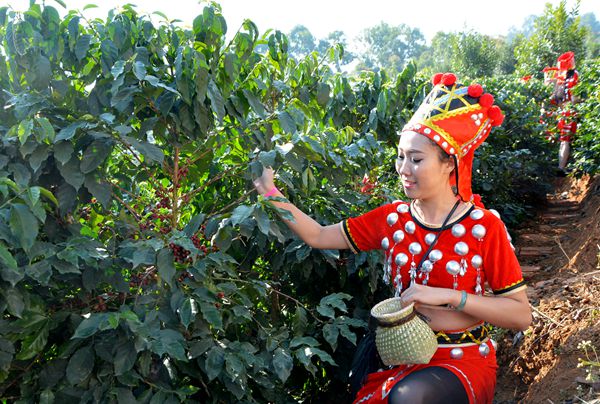
An introduction to Yunnan Coffee in China Yunnan coffee is distributed in Baoshan, Nawenshan, Simao, Yunnan.
Yunnan Coffee in China was planted on a large scale in the mid-1950s, with a planting scale of 4000 hectares. By the end of 1997, the planting area of coffee in the province had reached 7800 hectares. At present, the planting area of the province accounts for 70% of the national area, and the output accounts for 83% of the whole country. Yunnan coffee has established the dominant position in China in terms of planting area and coffee bean production. Cloud

Introduction to the Cultural Manor of the Flavor description of High-quality Coffee beans in the Coffee producing area of Ecuador
The minerals are mainly oil, mainly distributed in Guayaquil Bay, and oil fields are also found in the Amazon Plain. Gold and silver are distributed in Machaki and Saluma and other places. Copper is made in Machaki. There are sulfur mines in the Cologne Islands. In addition, there is iron, lead and so on. The forest area accounts for about 68% of the country's area, mostly in the eastern region, rich in valuable wood, such as mahogany and ointment.

Introduction to the planting Climate of Coffee in Yunnan, China
At present, Yunnan coffee production is mainly distributed in Pu'er (180000 mu), Baoshan (100000 mu), Dehong (120000 mu) and Lincang (20 mu). Most of them are catimor varieties. At present, more than 80% of them are used as raw materials for instant coffee processing, some are supplied to Nestl é, and some are exported to Europe and the United States by local traders. From the grading criteria of specialty coffee

Geographical location of coffee producing areas in Guatemala
Geographical location Guatemala is located in the northern part of Central America. Guatemala is located in the geographical area of Guatemala, bordering Mexico, Belize, Honduras and El Salvador. It is bordered by the Pacific Ocean to the south and the Gulf of Honduras in the Caribbean Sea to the east, bordering Mexico, El Salvador, Honduras and Belize on land, with a total area of 108889 square kilometers. [5] Climate
Introduction to the planting Climate of Coffee in Yunnan Province
At present, Yunnan coffee production is mainly distributed in Pu'er (180000 mu), Baoshan (100000 mu), Dehong (120000 mu) and Lincang (20 mu). Most of them are catimor varieties. At present, more than 80% of them are used as raw materials for instant coffee processing, some are supplied to Nestl é, and some are exported to Europe and the United States by local traders. From the grading criteria of specialty coffee

Introduction to the planting Climate of Coffee in Yunnan, China
At present, Yunnan coffee production is mainly distributed in Pu'er (180000 mu), Baoshan (100000 mu), Dehong (120000 mu) and Lincang (20 mu). Most of them are catimor varieties. At present, more than 80% of them are used as raw materials for instant coffee processing, some are supplied to Nestl é, and some are exported to Europe and the United States by local traders. From the grading criteria of specialty coffee

Introduction to the description of coffee grindability, taste, price and flavor in Lazmus Manor, Colombia
Colombia is the second largest Arabica producer in the world. The country spans the northern and southern hemispheres, and the coffee garden is mainly distributed at 2-8 degrees north latitude. From north to south, due to the different rainy season, there are two major harvest periods, the main harvest period is from October to February, and the harvest period is from April to September. In other words, Colombian coffee (Cafe de Colombia) is harvested all the year round.
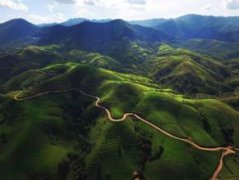
A brief introduction to the cultivation of fine products in Agua Dulsai, Guatemala with balanced acidity, geographical location, climate and altitude
Unlike the traditional method of making iced coffee, cold extraction requires more patience and time. Joe said. The original cold extraction exclusive coffee beans will be freshly ground, but also in the cold extraction special apparatus Toddy Brewer slow extraction, in order to get the perfect cold extraction iced coffee. Slow extraction instead of hot water rapid extraction can better bring out the sweetness of coffee itself.

A brief introduction to the cultivation of Colombian boutique coffee beans with balanced taste, geographical location, climate and altitude
With rich landforms, low latitudes and high elevations, Colombia has excellent conditions for the growth of boutique coffee. The Costa Rican coffee area, located between three and eight degrees north latitude, is a low-latitude coffee belt. It can be harvested twice a year, and ripe coffee can be harvested almost every month from south to north. Large-scale commercialized coffee farmland is distributed in the central and northern parts of China, and is the main producing area of commercial beans, including the central part with a long history.
The cultivation of boutique coffee beans in Agua Durse, Guatemala, geographical location, climate sea.
This is the Dursai Sea area in the Agua volcanic region of Antigua, Guatemala. 100% Arabica coffee beans are grown in this area, with branches of bourbon, iron pickup, Kaduai and Kaddura. There are also a small number of yellow bourbon, rose and Pacamara and other varieties. Antigua is a famous producer of coffee. Antigua coffee comes from Camana Manor (Hacienda Carmon

A brief introduction to the cultivation of boutique coffee beans in Santa Rita Manor, geographical location, climate and altitude
The suitable climate in Colombia provides a real natural pasture for coffee. Coffee trees in Colombia are mainly cultivated in the Andes, on steep slopes about 1300 meters above sea level, where the annual temperature is about 18 degrees Celsius, annual rainfall is 2000 to 3000 millimeters, latitude 1-11 15 north, longitude 72-78 west, and the specific range of elevation can exceed 2.000 meters.

The aristocratic coffee in Guatemala Agua Dulsai boutique coffee bean cultivation geographical location and climate
If you still remember the brave coffee used by Lengfei last year, Peruvian Amazon Coffee, you must not miss this year's Lengfei's exclusive Lengfei mixed coffee beans! Seeing the editor's expectant eyes, Joe continued: it was launched after several tastings and experiments by Starbucks's coffee development team in Seattle, mixed with coffee beans from Africa and Latin America. Finish talking.

Introduction of Coffee Bean growing area in Panama
Following Cafe (official Wechat account vdailycom) found that Beautiful Cafe opened a small shop of its own. The distinction between the growing areas of Panama mainly depends on the sales situation of coffee, but mostly on the geographical distribution. In the past, coffee was widely spread, and the following areas are actually one area, but these areas are closely linked. Boquete, this is the best known Panamanian product.

A brief introduction to the cultivation of boutique coffee beans in West Java, Indonesia, geographical location, climate and altitude
At present, 90% of the coffee beans exported from Indonesia are Robusta beans, and only 10% are Arabica. Before 1920, due to a major environmental disaster, Indonesian coffee varieties were replaced with Robusta beans, so Mandarin coffee in Sumatra is a rare Arabica bean, a treasure before it was discovered in the Blue Mountains. The output of such authentic products is also very small.